
Pakistan: Karachi Rangers suicide attack case names Jamaat-ul-Ahrar commanders
· 97 views

KARACHI (Terror Monitor) — Pakistani police have named several alleged commanders of the banned militant group Jamaat-ul-Ahrar as the suspected masterminds behind the suicide bombing and armed assault on a Rangers compound in Karachi's Gulistan-e-Jauhar area.
The case was registered by the Counter Terrorism Department (CTD) on the complaint of Rangers Sub-Inspector Asad Mahmood Khan. The FIR includes charges of terrorism, murder, attempted murder, damaging government property, illegal possession and use of weapons and explosives, terrorist conspiracy, and other related offenses.
According to the FIR, at around 8:10 p.m. on June 27, 2026, a suicide bomber detonated explosives near Rangers personnel at the gate of the Rangers Workshop Company TC Building in Gulistan-e-Jauhar.
The explosion killed Havaldar Riaz, Sepoy Dawood Parvez, Sepoy Abdul Qadeer, and five other people.
The FIR states that immediately after the suicide blast, three heavily armed militants entered the compound through the damaged entrance, opened indiscriminate fire, and threw hand grenades.
Special Forces and the Quick Response Force (QRF) responded to the scene, where Rangers and other security personnel engaged the attackers. Two militants were killed during the operation, while a third was captured alive after being wounded.
Police identified the arrested suspect as Usman Ali. During interrogation, he identified his deceased accomplices as Umar, Abdul Hadi, and the suicide bomber Janan. Authorities said they recovered a large cache of weapons, hand grenades, and ammunition from the attackers.
The assault also damaged government property and several vehicles, while four Rangers personnel were injured and taken to hospital for treatment.
According to the FIR, the arrested suspect told investigators that he was a resident of Jalalabad, Afghanistan. He claimed that one week before the attack, he entered Karachi with Janan and Umar, both Afghan nationals, and Abdul Hadi, a resident of Pakistan's Bajaur district who had allegedly been associated with the militant organization in Afghanistan for an extended period.
He further told investigators that the group stayed in Korangi with the assistance of local facilitators and conducted reconnaissance of the Rangers Workshop before carrying out the attack.
The FIR alleges that the operation was planned by Jamaat-ul-Ahrar commanders Umar Qari, Maulvi Ahrar, and Abdul Wajid, who are reportedly based in Afghanistan and allegedly dispatched the attackers to Pakistan.
It further alleges that the attackers received militant training in Afghanistan from Jamaat-ul-Ahrar commanders Mullah Tahir Afghani, Mullah Abdul Manan, and Umar Afridi.
Police said four additional cases related to the attack have also been registered by different police officers, while the investigation remains ongoing.
Related Articles
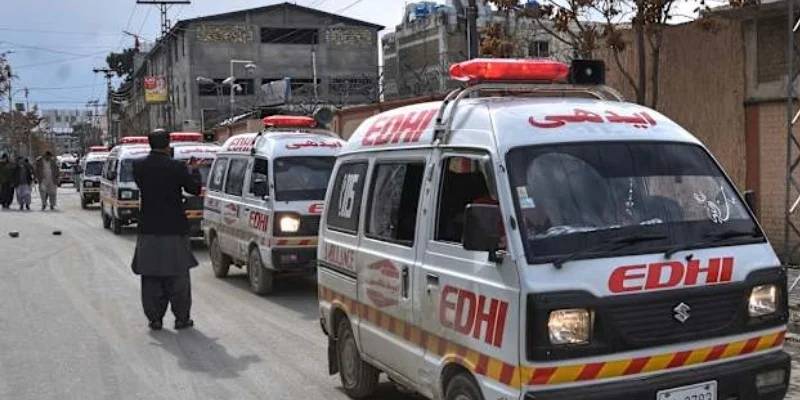
Pakistan: BAP District President Killed in Balochistan, Six Bodies Recovered in Mastung
BAP district president Abdul Rahman Langove was shot dead by unidentified armed men outside his home in Nushki, while six bullet-riddled bodies were recovered from two locations along the Quetta-Karachi National Highway in Mastung, Balochistan.
Pakistan Army Says 21 Militants Killed in Operations Along Afghan Border
Pakistan’s military says 21 militants were killed in security operations and clashes in Khyber Pakhtunkhwa, including 17 in North Waziristan. The military also said the total number of militants killed while attempting to infiltrate Pakistan has reached 25.

KP Chief Minister Criticizes Maryam Nawaz Over Terrorism Remarks
Khyber Pakhtunkhwa Chief Minister Sohail Afridi has criticized Punjab Chief Minister Maryam Nawaz over her remarks that Punjab faces a greater security threat from neighboring provinces than from neighboring countries. Afridi accused her of undermining Pakistan’s position on terrorism and said the statement had given India and Prime Minister Narendra Modi a “clean chit” over terrorism in Pakistan.