
Pakistan Successfully Tests Fateh-II Hypersonic Ballistic Missile With Extended Range
· 138 views
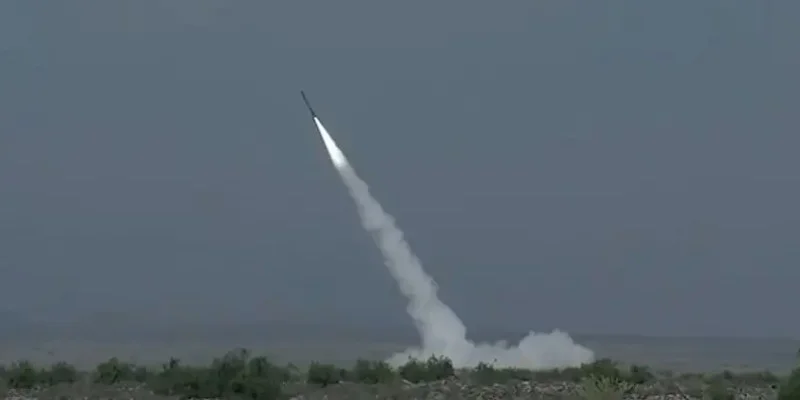
ISLAMABAD (Terror Monitor) — Pakistan’s military has successfully tested the extended-range (ER) variant of its Fateh-II hypersonic ballistic missile, the military’s media wing announced on Tuesday, saying the weapon is equipped with advanced navigation systems and avionics and is designed to strike designated targets with high precision.
According to a statement issued by the Inter-Services Public Relations (ISPR), the successful test demonstrated the missile’s enhanced capabilities, including its ability to change its course and direction during flight.
The military said the missile’s advanced technological features would improve its accuracy and enable it to overcome enemy missile defence systems.
“The weapon system is equipped with an advanced navigation system and state-of-the-art avionics,” the ISPR said, highlighting its ability to adjust its trajectory while in flight.
The military’s media wing said the extended range would further enhance the Pakistan Army’s operational reach and its ability to engage targets located at greater distances.
The statement did not disclose the missile’s exact range, the location of the test or other technical specifications.
Advanced navigation and targeting capabilities
According to the ISPR, the Fateh-II is designed to strike designated targets with a high degree of accuracy. Its advanced navigation and avionics systems are intended to support precision targeting and improve its ability to manoeuvre during flight.
The military also said the missile could defeat enemy defence systems, although the statement did not provide details of the systems against which it had been tested or disclose the results of any specific missile-defence interception trials.
The extended-range variant is intended to provide the Pakistan Army with greater operational reach, allowing it to engage targets at distances beyond those covered by shorter-range versions of the weapon.
The development comes as Pakistan continues to advance its missile capabilities as part of its broader military modernisation efforts.
Senior military officials and engineers witness test
The successful test was witnessed by the Commander of the Army Rocket Force Command, senior Pakistan Army officers, scientists and engineers involved in the missile programme, according to the ISPR.
The commander praised the scientists and engineers for their dedication and technical expertise in developing the weapon system.
The military did not provide further details about the test’s flight profile, the distance travelled by the missile or the specific performance parameters evaluated during the launch.
Pakistan’s leadership congratulates scientists
Following the successful test, Pakistan’s president, prime minister, chief of defence forces and service chiefs congratulated the scientists and engineers involved in the programme.
The congratulations recognised the technical work behind the missile’s development and the military’s efforts to improve the country’s defence capabilities.
The ISPR described the test as a milestone in enhancing the Pakistan Army’s operational reach and precision-strike capabilities.
The announcement did not include details of any future tests or specify when the extended-range Fateh-II system would be inducted into operational service.
Related Articles
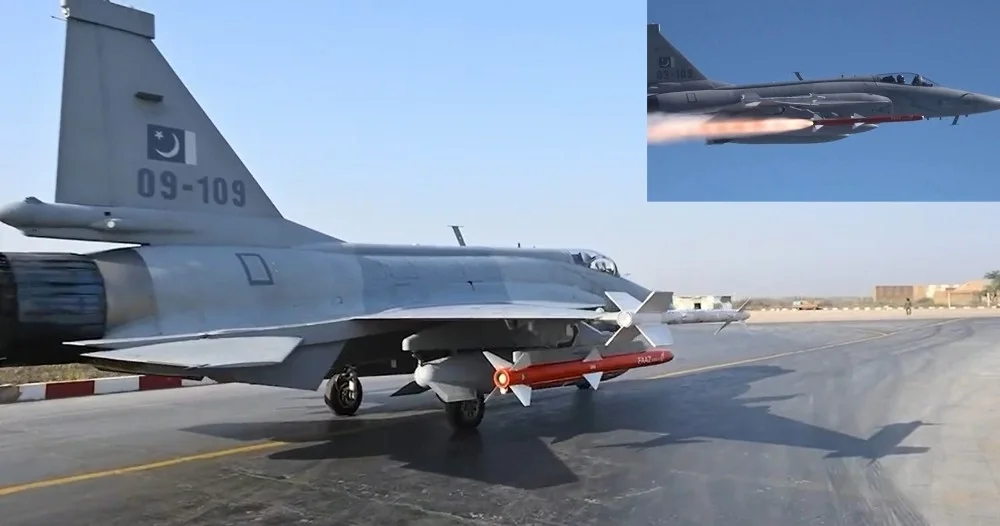
Pakistan Successfully Tests First Indigenous FAZ Air-to-Air Missile: ISPR
Pakistan has successfully tested its first indigenously developed FAZ air-to-air missile, with the ISPR saying the advanced weapon will enhance the Pakistan Air Force's operational capabilities and strengthen the country's defense posture.

US Intelligence Chief Warns Iran Has Intensified Plots Against Americans Abroad
US intelligence chief Jay Clayton has warned that Iran has significantly intensified efforts to target American personnel in the Middle East and other countries. In a memo to Secretary of State Marco Rubio, Clayton said alleged lethal plots had reached advanced stages. The warning comes as Washington orders nonessential diplomatic personnel to leave Saudi Arabia amid growing concerns over Iranian threats and Houthi attacks across the region.

Russia Arrests German National Accused of Fighting for Ukraine as a Mercenary
Russia’s FSB has arrested a German national accused of fighting for Ukraine as a mercenary. Russian authorities claim he previously fought in Afghanistan and Syria and served as a sniper in Ukraine.
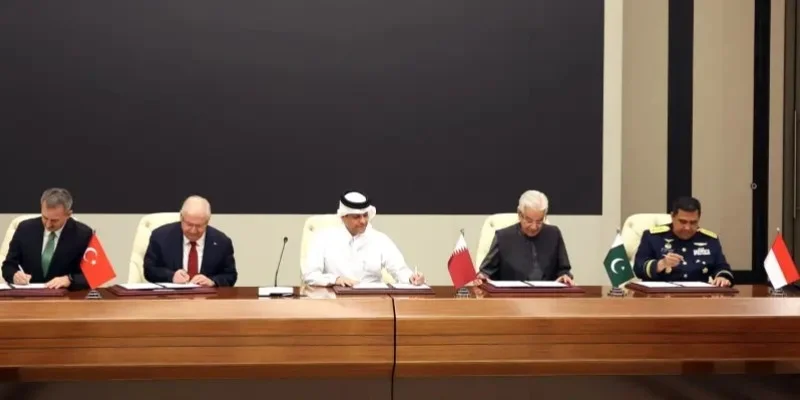
Turkey, Qatar, Pakistan and Indonesia Sign ‘Badr’ Defence Pact to Boost Military Production
Türkiye, Qatar, Pakistan and Indonesia have signed the Badr Memorandum of Understanding in Doha to strengthen defence industry cooperation, expand military production and promote collaboration in technology, training, research and development amid rising regional security concerns.