
Israeli PM Netanyahu Says 90% of Work to Eliminate Iran’s Nuclear Program Is Complete
· 109 views
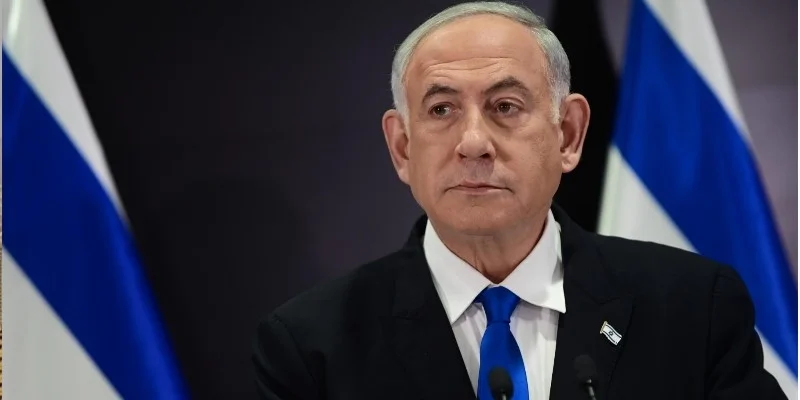
TEL AVIV (Terror Monitor) — Israeli Prime Minister Benjamin Netanyahu has claimed that 90 percent of the work to eliminate Iran’s nuclear program has been completed, arguing that only he can finish the remaining task as he intensifies his campaign ahead of Israel’s October 27 parliamentary election.
“We’ve done 90 percent of the work, 10 percent remains,” Netanyahu said in an interview with Israel’s Channel 14 on Sunday. He questioned whether his political rivals, including former Israeli military chief Gadi Eisenkot, could complete the mission, adding: “Only I can do it.”
The remarks came during the final days of an increasingly contentious election campaign in which Netanyahu has placed Iran’s nuclear ambitions and Israel’s national security at the center of his political message. According to reporting by Agence France-Presse (AFP), carried by Arab News, Netanyahu has sought to portray Eisenkot and his allies as incapable of dismantling Iran’s nuclear program.
Netanyahu also invoked the Muslim Brotherhood while attacking his rival, linking the opposition to what he described as threats to Israel’s security.
AI-Generated Nuclear Image Shared Ahead of Election
Netanyahu escalated his warnings on Sunday by sharing an AI-generated image depicting a nuclear explosion over Tel Aviv on social media. The image was originally posted alongside a message by right-wing Israeli political commentator Yuval Bloomberg, who described Iran’s potential acquisition of nuclear weapons as an existential threat to Israel.
The accompanying message argued that other political disputes were insignificant compared with the danger posed by Iran and urged Israelis to prioritize confronting Tehran. It also warned that future generations would not forgive Israel if it missed the opportunity to address the threat while US President Donald Trump remained in office.
The post suggested that electing a leader unable to confront Iran could expose Israelis to the danger of a second Holocaust.
According to The Times of Israel and Anadolu Agency, the image and accompanying message prompted sharp criticism from opposition politicians, who accused Netanyahu of using fear to influence voters shortly before election day.
Eisenkot Accuses Netanyahu of Fearmongering
Eisenkot, a former chief of staff of the Israel Defense Forces and leader of the Yashar party, accused Netanyahu of exploiting the Iranian threat for electoral purposes.
In a post on X, Eisenkot said the prime minister was repeating tactics used in previous election campaigns, accusing him of spreading fear and threatening Israelis with mass destruction after failing to achieve the objectives he had set for the war against Iran.
“You have once again failed spectacularly and blatantly to achieve the war objectives you yourself set,” Eisenkot said in his criticism of Netanyahu.
Eisenkot has also challenged the government’s claims regarding the destruction of Iran’s nuclear capabilities. According to Anadolu Agency, he said he did not see an immediate and direct threat that would justify launching a new military attack on Iran ahead of the election.
Yair Golan, leader of the Democrats party, also condemned Netanyahu’s decision to share the nuclear-explosion image. Golan said the prime minister was spreading panic and called for him to be kept away from social media.
Opposition leader Yair Lapid separately criticized Netanyahu’s approach, arguing that the prime minister was using warnings about national destruction to overshadow other political controversies.
Questions Over Netanyahu’s Claims About Iran’s Nuclear Program
Netanyahu’s latest claim that 90 percent of the work remains completed sits uneasily alongside his previous statements that Israeli and US military operations had severely damaged Iran’s nuclear program.
The Times of Israel reported that Netanyahu had repeatedly described Iran’s nuclear capabilities as devastated during the conflicts with Tehran in 2025 and 2026. In a statement in March, he said Iran could no longer threaten Israel’s existence as a result of Israeli strikes. He also told the United Nations in September that Israel and the United States had devastated Iran’s atomic weapons capabilities.
The prime minister’s latest remarks, however, suggest that he believes further action is necessary to complete the objective.
His assertion that 90 percent of the work has been completed was not accompanied by a publicly presented technical assessment explaining how that figure was calculated. It should therefore be understood as Netanyahu’s political and strategic claim rather than an independently verified measurement of the damage to Iran’s nuclear infrastructure.
Iran’s nuclear program has remained a central point of confrontation between Tehran and Israel, with disputes involving uranium enrichment, nuclear facilities, international inspections and concerns over the possibility of Iran developing nuclear weapons. Iran has consistently maintained that its nuclear activities are peaceful, while Israel has argued that preventing Tehran from acquiring nuclear weapons is a vital security priority.
Election Race Enters Final Days
Israel is scheduled to hold parliamentary elections on October 27, with Netanyahu facing a strong challenge from Eisenkot and other opposition figures. Polls published before the final pre-election restriction on new surveys indicated a close contest between Netanyahu’s political bloc and the opposition.
AFP reported that both Netanyahu and Eisenkot were seeking to mobilize voters around competing visions of Israel’s security and political future. Netanyahu has emphasized his record on national security and his confrontation with Iran, while Eisenkot has called for national unity, greater accountability and an investigation into the failures surrounding Hamas’s October 7, 2023, attack.
Netanyahu’s opponents argue that his focus on Iran is being used to divert attention from the government’s domestic controversies and its handling of the war. The prime minister, meanwhile, has maintained that confronting Iran’s nuclear ambitions is an overriding national priority.
The exchange over Iran’s nuclear program, coupled with Netanyahu’s sharing of an AI-generated image of a nuclear explosion over Tel Aviv, has intensified the political dispute in the final stretch of the campaign.
With Israelis due to vote on Tuesday, the confrontation has placed the question of who can best manage the Iranian threat at the center of the election debate.
Related Articles
Turkish Parliament Ratifies Mecca Defence Pact with Pakistan and Saudi Arabia
Türkiye’s parliament has ratified the Mecca Joint Defence Agreement with Pakistan and Saudi Arabia by 279 votes to 119, formalising a trilateral pact under which an armed attack against one member would be treated as an attack against all three. The agreement provides for military coordination, intelligence sharing and mutual defence assistance, while any deployment of Turkish troops to Saudi Arabia would require separate parliamentary approval.
Houthis Claim Saudi Airstrikes Kill 30 at Busy Market in Yemen's Taiz Province
Iran-backed Houthi rebels claim Saudi-led coalition airstrikes killed at least 30 people and wounded eight others at a crowded market in Yemen's Taiz province. Yemeni government-aligned authorities have disputed the Houthis' account, while the Associated Press says it could not independently verify responsibility for the attack.
Iran Rebuilds Missile Bases and Moves Military Infrastructure Underground Amid Fears of Renewed US-Israeli Strikes
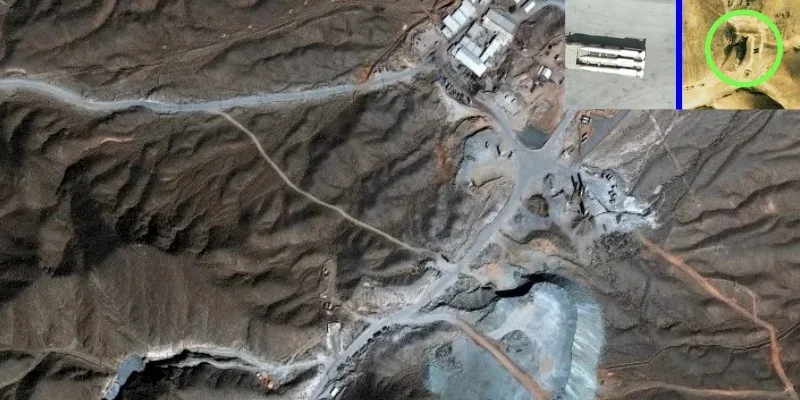
Satellite imagery shows Iran rebuilding damaged missile bases and expanding underground military facilities as Tehran prepares for possible renewed US-Israeli airstrikes. The reconstruction comes amid growing speculation about further American military action and political divisions in Washington over the war's consequences.
US Sanctions Indian Couple and Companies Over Alleged Support for Iran’s Shadow Tanker Fleet
The US has sanctioned an Indian couple and several companies for allegedly operating fraudulent maritime registries and helping Iran’s shadow tanker fleet transport oil while evading international sanctions.