
Pakistan Unveils Draft Laws to Restructure Defence and Strategic Command
· 75 views
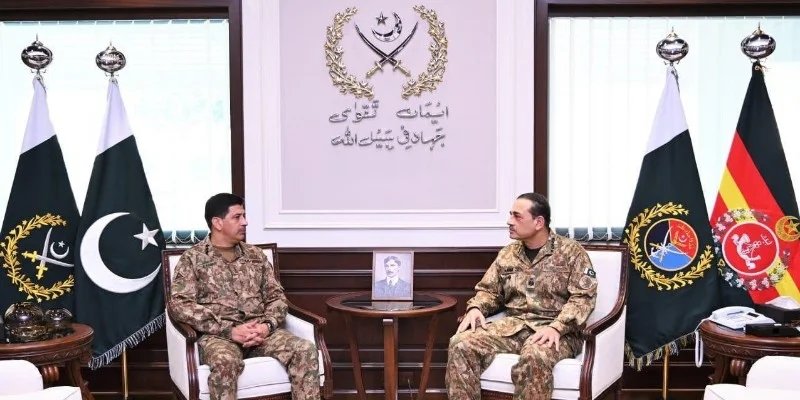
Islamabad (Terror Monitor) — Drafts of two new laws aimed at restructuring Pakistan’s defence and strategic command system have emerged, proposing the creation of a new post of Chief of Defence Forces (CDF), a central headquarters for the armed forces and changes to the structure of the National Command Authority (NCA).
The two proposed laws are the Pakistan Defence Forces Act 2026 and the National Command Authority (Amendment) Act. The federal cabinet approved both draft bills on Thursday, and they will now be presented to Parliament for approval.
Under the proposed amendment to the National Command Authority law, references to the Chairman Joint Chiefs of Staff Committee would be replaced with references to the Chief of Defence Forces. As a result, the CDF would become a member of the National Command Authority.
The draft also proposes adding the Commander National Strategic Command to the NCA, formally establishing his representation and coordination role in matters relating to Pakistan’s strategic forces.
The amendment would come into force immediately after approval by Parliament but would be deemed to have taken effect from November 27, 2025. According to the draft, the changes are intended to bring the NCA law into line with the new defence command structure proposed under the Pakistan Defence Forces Act 2026.
New Chief of Defence Forces Post
The Pakistan Defence Forces Act 2026 proposes establishing the post of Chief of Defence Forces under Article 243 of the Constitution.
Under the proposed law, the CDF would be responsible for coordination among the three armed services, joint planning and improving operational coordination between the military branches.
The bill also proposes establishing a central institution called the Defence Forces Headquarters, which would serve as the central headquarters of the armed forces. The Chief of Defence Forces would head the institution and oversee its administrative and operational affairs.
The draft gives the CDF powers relating to the organisation of the armed forces, joint operational capabilities, combat readiness and matters concerning national security.
The CDF would also have the authority to issue necessary directions and orders to facilitate coordination and joint operations among the armed forces.
Role and Powers of CDF
The proposed legislation assigns the Chief of Defence Forces the responsibility of advising the prime minister on important matters concerning the armed forces.
The CDF would remain accountable to the prime minister in exercising his powers, while approval from the prime minister would be required for certain matters under the proposed framework.
The bill also contains provisions concerning the Chief of Army Staff and other service chiefs, as well as certain administrative powers for the CDF relating to senior military officers.
The federal government would be empowered to formulate rules and regulations for implementing the new law, while the CDF would also be authorised to issue directions and regulations within his mandate.
If difficulties arise during implementation, the federal government would have the authority to take measures to resolve them. Where necessary, such matters could also be addressed through an order issued by the president.
Existing Military Laws
The proposed legislation includes provisions relating to the Pakistan Army Act 1952, Pakistan Air Force Act 1953 and Pakistan Navy Ordinance 1961 to bring the existing legal framework into line with the proposed defence command structure.
Orders, notifications and directions issued before the new law comes into force would remain valid unless they conflict with provisions of the new legislation.
If approved by Parliament, the proposed laws could create a new administrative and legal framework for Pakistan’s defence and strategic command system.
Under the proposed structure, the Chief of Defence Forces would assume a central role in coordination among the armed forces, joint operational planning, national security matters and strategic-level affairs.
Related Articles
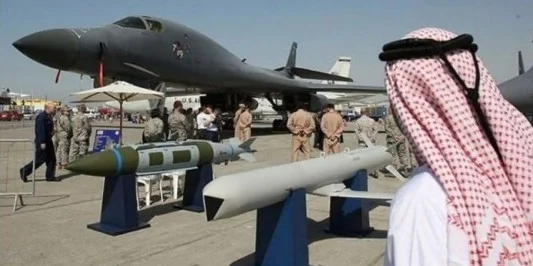
US Approves $5 Billion Arms Sale to Saudi Arabia
The U.S. State Department has approved a $5 billion military equipment sale to Saudi Arabia, including guidance systems for thousands of bombs and long-range missiles. Washington said the deal would strengthen Saudi Arabia’s air-defense capabilities and contribute to stability and economic development in the Gulf.

Pakistan Appoints Major General Faisal Naseer as NACTA National Coordinator
Pakistan’s federal government has appointed Major General Faisal Naseer as National Coordinator of the National Counter Terrorism Authority (NACTA) for a three-year term. Naseer, a former head of the ISI’s Internal Wing, takes charge as Pakistan faces rising militant violence, particularly in Khyber Pakhtunkhwa and Balochistan.

Israel and Greece Sign $3.5 Billion Defense Deal for Multilayered Air Defense System
Israel and Greece have signed a $3.5 billion defense agreement, their largest arms deal to date, under which Athens will acquire a multilayered Israeli air defense system designed to counter ballistic missiles, drones and other aerial threats.
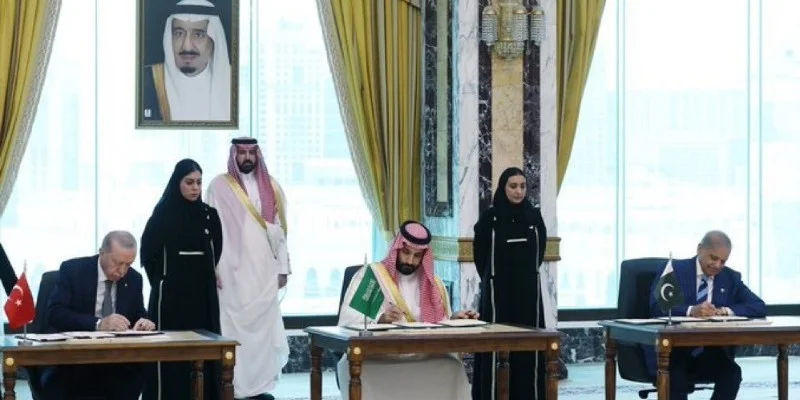
Turkey, Saudi Arabia and Pakistan to Hold First Meeting Under New Joint Defense Pact
Turkey, Saudi Arabia and Pakistan are set to hold their first committee meeting in Istanbul under the Makkah Joint Defense Agreement, which treats an armed attack on any one of the three countries as an attack on all. The pact aims to strengthen collective defense, military coordination and cooperation in the defense industry amid rising tensions across the Middle East.