
Shehbaz Warns Any Attempt to Divert Pakistan’s Indus Waters Would Be an Act of War
· 52 views
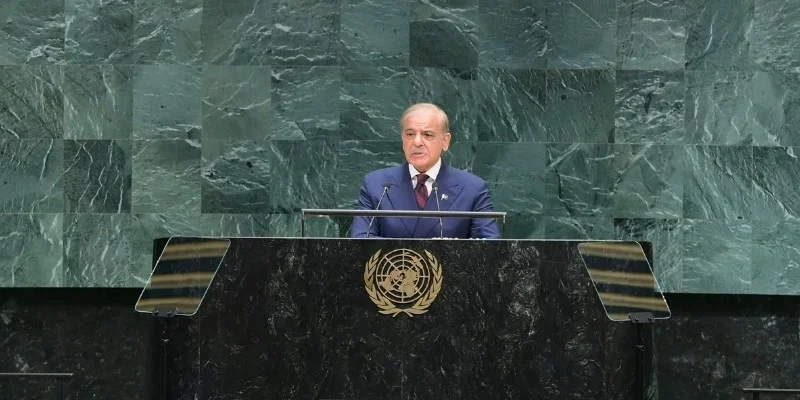
NEW YORK (Terror Monitor) — Pakistan Prime Minister Shehbaz Sharif warned at the United Nations General Assembly on Friday that any attempt to stop, impede or divert Pakistan’s share of the waters of the Indus River system would be treated as an “act of war,” while urging international efforts to resolve regional conflicts through diplomacy.
Addressing the 81st session of the UN General Assembly in New York, Sharif said the Indus River system was the “lifeblood” of Pakistan and the wider region. He criticized India’s decision to hold the Indus Waters Treaty in abeyance, saying Islamabad considered the move to have no legal basis.
Sharif also said Pakistan’s position had been supported by UN experts and the Court of Arbitration. These remarks reflected Pakistan’s position in the continuing dispute with India over the treaty.
The prime minister said water should not be used as a weapon and warned that any attempt to block or divert Pakistan’s water would have serious consequences.
He also called for a “just and sustainable” settlement of the Jammu and Kashmir dispute, urging the United Nations to ensure implementation of its resolutions concerning the right of self-determination.
Gaza and Palestinian statehood
Sharif devoted part of his address to the war in Gaza, saying Palestinian children had the same right to life and dignity as children elsewhere in the world.
He condemned Israeli military operations in Gaza and expressed concern over the expansion of Israeli actions into the occupied West Bank. Sharif also accused Israel of pursuing an agenda of forced displacement of Palestinians.
Pakistan, he said, supports the establishment of an independent and sovereign Palestinian state based on the pre-1967 borders.
He also condemned Israeli military actions in Lebanon and Syria.
The remarks came as the Middle East remained a central issue at this year’s UN General Assembly, with the United States-Iran conflict, renewed fighting involving Iran-backed Houthis and the Israel-Palestinian conflict dominating diplomatic discussions. The Associated Press reported that Gulf states were simultaneously pressing for an end to hostilities and safe passage through key maritime routes.
Pakistan condemns Houthi attacks on Saudi Arabia
Sharif strongly condemned recent attacks by the Iran-backed Houthis against Saudi Arabia, including an attempted drone attack near the holy city of Makkah.
He said any threat to the safety and sanctity of the Haramain Sharifain — Islam’s two holiest sites — constituted a “red line” that must not be crossed.
“Pakistan stands in complete solidarity with the brotherly people of Saudi Arabia,” Sharif said, according to Pakistan’s official account of his speech.
He described the Strait of Hormuz and the Bab al-Mandeb as vital arteries of the global economy and said both waterways must remain open.
The comments came as attacks and military tensions around Saudi Arabia and the wider region have raised concerns over energy supplies and maritime trade. Reuters has reported that disruptions around the Strait of Hormuz have affected global energy markets, while Iran has separately indicated that it could reopen the waterway under conditions involving reduced U.S. military pressure and an end to the blockade of Iranian ports.
Makkah defence agreement
Sharif also defended the recently signed Makkah Joint Defence Agreement between Pakistan, Saudi Arabia and Türkiye.
He said the three-country alliance was not directed against any particular state but represented a collective commitment to regional defence, stability and peace.
The agreement, signed in Makkah on August 7, states that an armed attack against any one of the three countries would be regarded as an attack against all three and calls for expanded defence cooperation.
Sharif’s remarks came on the same day that military chiefs from Pakistan, Saudi Arabia and Türkiye met in Riyadh to discuss regional security, intelligence sharing, military coordination and collective defence.
Pakistan’s mediation efforts
The Pakistani prime minister also highlighted Islamabad’s role in efforts to mediate between Washington and Tehran.
Sharif said Pakistan had sought to facilitate dialogue after the conflict that began in February caused casualties, economic disruption and pressure on major maritime routes, particularly the Strait of Hormuz.
He said Pakistan helped bring the United States and Iran to negotiations in Islamabad and subsequently contributed to the Islamabad Memorandum of Understanding aimed at establishing a framework for ending the conflict.
Sharif praised Field Marshal Syed Asim Munir and Deputy Prime Minister and Foreign Minister Ishaq Dar for their roles in the diplomatic efforts.
Pakistan’s government has continued to promote implementation of the Islamabad MoU. Sharif met Iranian President Masoud Pezeshkian in New York on September 24, where the two sides discussed regional tensions and the need for sustained diplomacy. Pakistan’s government said Pezeshkian reaffirmed Tehran’s desire to deepen cooperation with Islamabad.
Sharif acknowledged that regional tensions had again intensified in recent days but called for diplomacy and negotiations to remain central despite continuing military confrontations.
Terrorism and Afghanistan
On terrorism, Sharif described the threat posed by terrorist organizations as a serious challenge to international peace and security.
He accused the Tehreek-e-Taliban Pakistan (TTP) and the Baloch Liberation Army (BLA) of using Afghan territory to conduct attacks against Pakistan.
Afghan Taliban authorities have repeatedly rejected Pakistani allegations that Afghanistan is being used as a base for attacks against Pakistan, while Islamabad has continued to press Kabul to take action against TTP and other terrorist groups.
Sharif’s address brought together Pakistan’s principal foreign-policy concerns — water security, Kashmir, Palestine, terrorism, regional maritime security and the country’s diplomatic efforts over the Middle East conflict — as world leaders gathered for the annual UN debate.
Related Articles
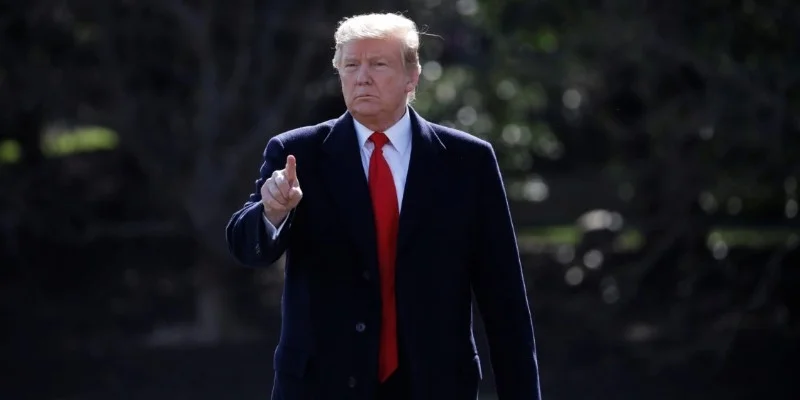
US President Trump Rejects Iran’s Seven-Day Ceasefire Proposal
U.S. President Donald Trump has rejected Iran’s proposal for a seven-day ceasefire aimed at ending the conflict, reopening the Strait of Hormuz and restarting nuclear negotiations, according to The Wall Street Journal. Iranian Foreign Minister Abbas Araghchi said Tehran was ready to implement the plan immediately if Washington agreed, while U.S. officials said diplomatic contacts with Iran were continuing through intermediaries.
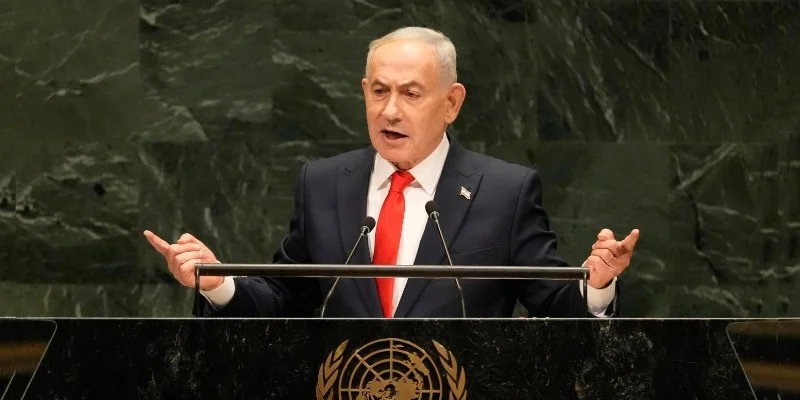
Netanyahu Defends Israel’s Military Actions at UN as Dozens of Delegates Walk Out
Israeli Prime Minister Benjamin Netanyahu defended Israel’s military operations in Gaza, Iran and across the Middle East during his U.N. General Assembly address, as dozens of delegates walked out in protest. Netanyahu rejected allegations of genocide in Gaza, criticized Palestinian President Mahmoud Abbas and Turkish President Recep Tayyip Erdogan, and accused international critics of targeting Israel unfairly.
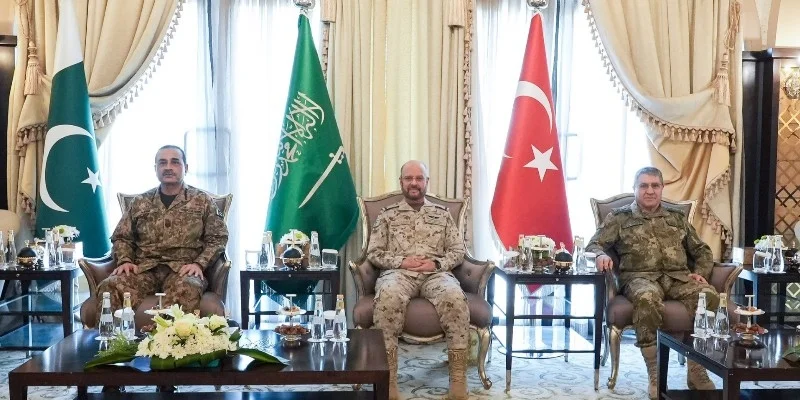
Pakistan, Saudi Arabia and Türkiye Military Chiefs Meet in Riyadh Under Makkah Defence Pact
Military chiefs from Pakistan, Saudi Arabia and Türkiye met in Riyadh under the Makkah Joint Defence Agreement to discuss regional security threats and attacks targeting Saudi Arabia. The three sides reaffirmed their commitment to collective defence and discussed intelligence sharing, military coordination, operational cooperation and the integration of defence capabilities.
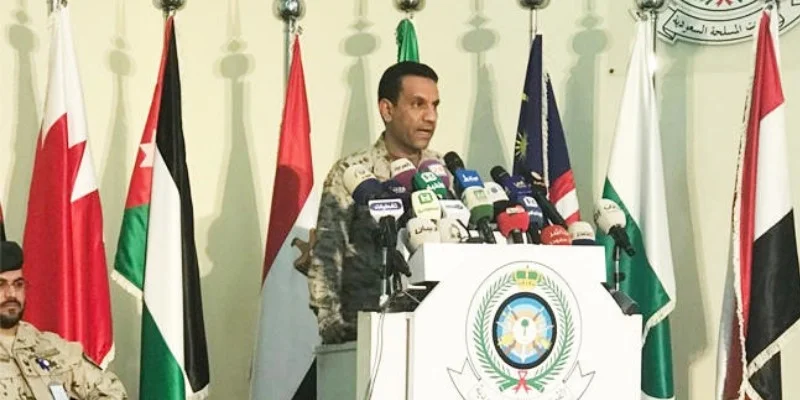
Saudi Arabia Says Six Houthi Ballistic Missiles Intercepted Near Taif and Yanbu
Saudi Arabia says its air defenses intercepted and destroyed six ballistic missiles launched by Iran-backed Houthis toward Taif and Yanbu. The reported interceptions come as attacks on Saudi energy infrastructure continue, while Aramco explores additional export routes and overseas storage options to reduce the impact of disruptions.