
Yemen Launches ‘Fajr al-Yemen’ Operation as Forces Seize Control of Bab al-Mandab
· 301 views
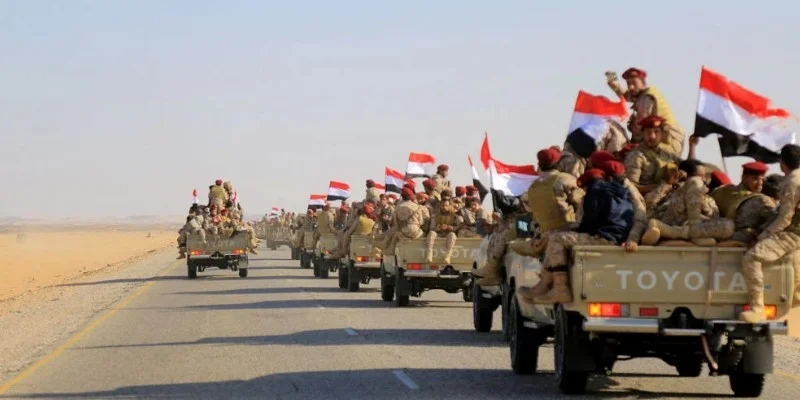
SANAA (Terror Monitor) —Yemen’s internationally recognized government has launched a major military operation, dubbed “Fajr al-Yemen” (Dawn of Yemen), against the Iran-backed Houthi movement. Government forces say they have seized control of the Bab al-Mandab Strait and the Dhubab airfield and are advancing toward the Houthi-held capital, Sanaa.
Yemeni military spokesman Brig. Gen. Majed Abdullah al-Nazili said government forces had also taken control of the key road linking Dhubab and Mokha, cutting an important route in the area. He called on Houthi fighters in Dhubab to lay down their weapons and surrender.
Government forces also said thousands of Houthi fighters had been detained during the operation.
Government vows to continue offensive
Rashad Mohammed al-Alimi, chairman of Yemen’s Presidential Leadership Council, said in a televised address that government forces would continue their military campaign until the country was liberated from what he described as the “terrorist militia’s control.”
Al-Alimi said the operation aims to restore state institutions, liberate Sanaa and end the Houthi insurgency. He said the decision to launch the counteroffensive came after all efforts to reduce tensions and pursue a political solution had been exhausted.
He thanked Saudi Arabia for its support and called on Yemen’s regional allies and international partners to support the Presidential Leadership Council and its forces.
Yemeni Foreign Minister Afrah al-Zouba also appealed for greater international support to defeat the Houthis, saying that stabilizing Yemen was in the interest of the international community.
Hundreds of airstrikes reported
The coalition’s spokesman said 100 fighter jets participated in the “Fajr al-Yemen” operation and that 324 high-value targets had been destroyed.
Yemeni government-aligned forces said 1,122 attacks had been carried out against Houthi positions, including artillery positions, rocket launchers and command-and-control centers.
Brig. Gen. al-Nazili said the strikes involved fighter jets, drones, missiles, rockets, artillery and snipers and targeted areas in Saada, Al Jawf, Taiz and Yemen’s coastal regions.
He claimed that approximately 1,747 Houthi fighters had been killed in the operations. The figures have not been independently verified.
Videos circulate on social media
Several videos have also circulated widely on social media, purportedly showing scenes from the fighting. Some appear to show government military vehicles running over Houthi fighters, while others appear to show Houthi fighters fleeing toward the sea.
Another video reportedly shows large numbers of bodies near Bab al-Mandab, which social media users have identified as Houthi fighters.
The locations, dates and authenticity of the videos could not be independently verified.
Houthis report Saudi airstrikes
Meanwhile, Al Masirah, a television channel affiliated with the Houthis, reported Saudi airstrikes on several areas of Saada province as well as Sanaa.
The channel said areas including southern Saada city, Sahar, Al Safra, Kataf and Al-Buqaa were targeted. It did not provide details on casualties or damage.
Houthi control and Bab al-Mandab
The Houthis, also known as Ansar Allah, have controlled Sanaa and large parts of northwestern Yemen since 2014. The areas under their control contain a large share of Yemen’s population.
Despite years of military operations by Saudi Arabia, the United Arab Emirates and some of their Western allies, the Houthis have maintained their hold over significant parts of the country and have expanded their military capabilities with Iranian support.
The reported capture of Bab al-Mandab is particularly significant because the strait is one of the world’s most important maritime chokepoints, connecting the Red Sea with the Gulf of Aden and the wider Indian Ocean.
The latest developments have added another front to the broader regional conflict that began with the U.S.-Israeli war against Iran in February. Iran has responded to the conflict with measures including restrictions on oil shipments through the Strait of Hormuz.
Iranian Foreign Minister Abbas Araghchi has said there is “no military solution” to the conflict with the United States, while warning that Tehran is prepared to defend itself against any further military action.
According to six people who spoke to Reuters, the United States is already providing intelligence support for Saudi operations in Yemen, while some regional and European countries are providing Riyadh with primarily defensive military assistance.
The latest offensive threatens to further reshape the balance of power in Yemen while raising concerns over the security of Bab al-Mandab and international shipping through the Red Sea.
Related Articles
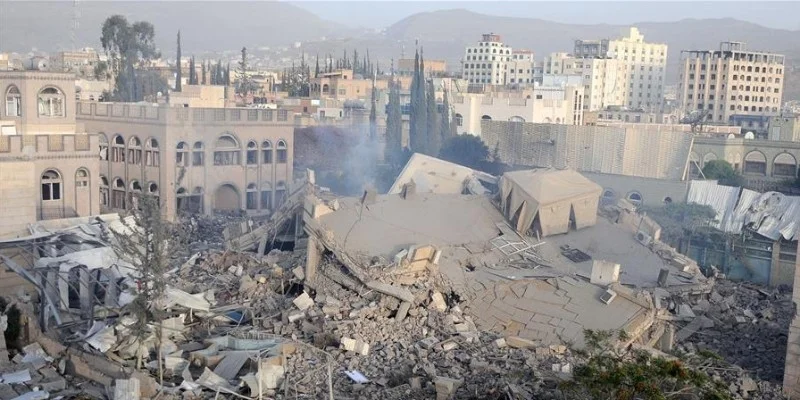
Houthis Say Saudi Airstrikes Kill 33, Injure 39 Near Yemen’s Sanaa
Houthi-run media reports that Saudi airstrikes near Yemen’s Sanaa have killed at least 33 people and wounded 39 others, mostly women and children. Saudi Arabia says it is investigating the reports.
US CENTCOM Establishes ‘Iron Gate’ Task Force to Disrupt Iran’s Weapons Supply Routes
US CENTCOM has established Task Force Iron Gate to disrupt Iran’s weapons supply routes through land borders and the Caspian Sea, expanding Washington’s efforts to restrict Tehran’s military capabilities.
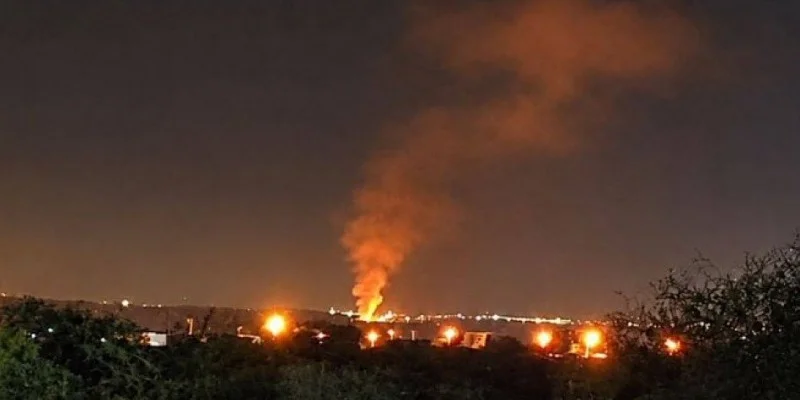
US Strikes Multiple Targets in Southern Iran Near Strait of Hormuz, Explosions Reported
The United States has struck multiple locations in southern Iran near the Strait of Hormuz, including Jask port, Qeshm Island and Bandar Abbas, triggering explosions across several areas. Iran claims it launched anti-ship ballistic missiles towards US naval warships in retaliation.

US President Trump Says Iran Will Never Be Allowed to Acquire Nuclear Weapons
US President Donald Trump has reiterated that Washington will never allow Iran to acquire nuclear weapons, claiming that US airstrikes on Iranian nuclear facilities in June 2025 prevented a potentially catastrophic threat to Israel and the Middle East.